Join Us to Safeguard Children's Rights
In developing countries, many children are denied the basic rights to survive, receive health and medical care, and education. Globally, more than 251 million children aged 5 to 17 are out of school, and 844 million people lack access to safe and clean drinking water. Even in affluent Hong Kong, the situation remains concerning. Child abuse cases have risen steadily in recent years, with 1,504 new cases registered in 2024, reflecting a 66% increase compared to 2020, highlighting the urgent need to strengthen safeguarding efforts in our city.
Take action with Plan International to safeguard the four fundamental rights of children: survival rights, developmental rights, protection rights and participation rights. Through our work in Education, Health, Livelihoods, and Protection locally and globally, we strive to ensure that girls are given equal opportunities, and treated with dignity and respect. Join “Plan with Children” to make a lasting difference in children’s lives together.
Health
Nourishing Children’s Growth Through Better Hygiene and Health
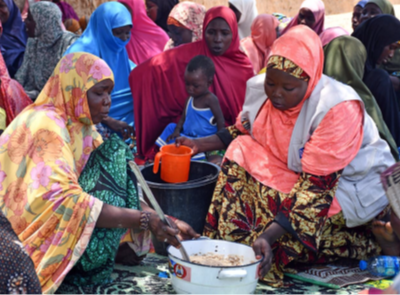
Seynabou (pseudonym), a young mother of two living in Niger, participated in a cooking demonstration run by Plan International. Through the sessions, she learned how to prepare nutritious foods using local produce, such as making fortified porridge with millet, peanuts, and soybeans, while also learning good hygiene habits.
“Thanks to this project, I have learnt how to prepare this porridge. I make it every time I feed my child because the ingredients are very easy to find. My child loves it, eats it at any time of day, and is in perfect health,” she says, smiling as she feeds her one-year-old.
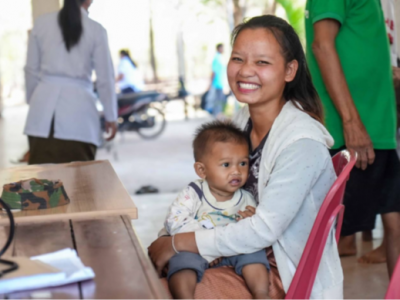
In a small town in southern Laos, Khamkhay (pseudonym) gave birth safely to her son at the local health centre a few months ago.
Previously, the community had only one basic health centre. During her pregnancy, conversations with neighbours about the limited facilities made her anxious about giving birth. Despite being pregnant, she planned to travel to the provincial hospital for better care.
Recognising these challenges, Plan International partnered with the health office in the community to support improvements to the centre’s facilities. Health workers received training in modern health practices, such as antenatal care and centre management. The quality of care was enhanced significantly as a result.
Upon learning of the improvements, Khamkhay’s confidence in the health centre was immediately restored. She gave birth there safely and continues to use its services. “I was amazed at how clean it was, the new equipment and the kindness of the health staff. I always bring my son here for his health check-ups and vaccinations,” she says, adding. “The doctors are friendly and I follow their advice on nutrition and childcare.”
Education
Supporting Children’s Pursuit of Learning and Dreams
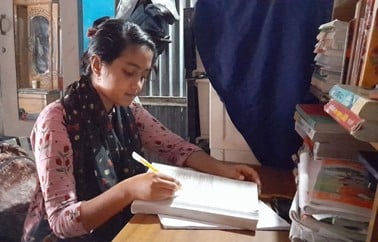
Chadni (pseudonym) is a junior high school student from Kaliganj union, Bangladesh. Following her father’s early death, Chandni faced financial hardship as her mother struggled to support the family on an inadequate salary. Although she wished to continue her studies, examination costs forced her to drop out.
“I really want to continue my education, but our family’s financial situation is difficult and my mother couldn’t manage to pay the exam fees,” she said.
At this critical moment, timely support from Plan International made a meaningful difference. Through our project, Chandni received education subsidies and school supplies, including a backpack, notebooks and pens. These helped her remain in school. “The project provided educational materials support and subsidies encouraging me to pursue education,” she explained.
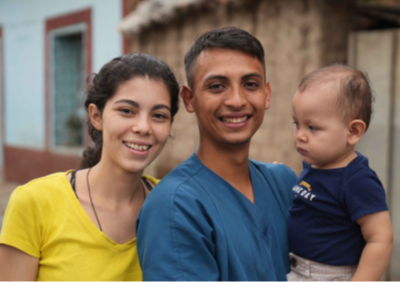
Saraí and Steven (pseudonym) are young parents from Chalatenango, El Salvador, who want to give their son, Derek (pseudonym), the best possible start in life. From the age of four months, Derek has attended an early childhood development centre run by Plan International. “Here, they taught us the importance of breastfeeding, how to introduce foods according to his age, and hygiene,” explained Saraí. “We also learned how to guide his development through sounds, so that he would understand who Mummy and Daddy were.”
At the centre, Derek can play with other children, express his creativity and develop important skills. Saraí and Steven have also received tools and training they need as new parents to support Derek’s development, practise empathetic parenting and maintain a safe, violence-free environment. “As mum and dad, we feel very happy to have our son at the early childhood centre, because it helps him with his cognitive development, and not only him but also us to grow as parents,” says Saraí.
Steven is also actively involved in Derek’s upbringing. “I have noticed many personal benefits, both for my wife and for me. Derek is developing social skills in an environment where he can interact with other children, and this helps them to form part of their personality,” shared Steven.
Livelihoods
Empowering Young People and Girls with Practical Skills for Independence and Confidence
Ruiqiu (pseudonym) is from Liangshan in southwestern Sichuan Province, a relatively underdeveloped region. Life there was simple, but as a waitress, her income was very low despite working hard. With barely enough to survive, she felt hopeless about her future. With her mother’s support, she moved to Chengdu to seek better opportunities.
City life, however, proved much tougher than expected. Lacking professional skills, she struggled in the highly competitive job market. What frustrated her most was the prevailing gender bias that men generally outperform women in certain roles. All of this left her feeling deeply defeated.
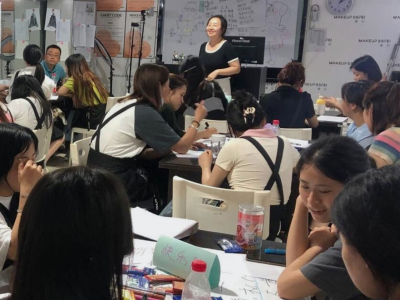
At such a difficult moment, Ruiqiu joined Plan International’s youth empowerment project, which opened a new chapter in her life. Through the project, she received training in beauty and makeup skills.“Besides teaching me beauty skills, the Project helped me recognise gender inequality at work. It also made me realise the importance of using the law to protect my rights, which will be invaluable in my future career,” Ruiqiu shared.
She gradually came to understand that success in the workplace depends on individual ability, not gender. She now believes that women can also achieve outstanding success in their careers.
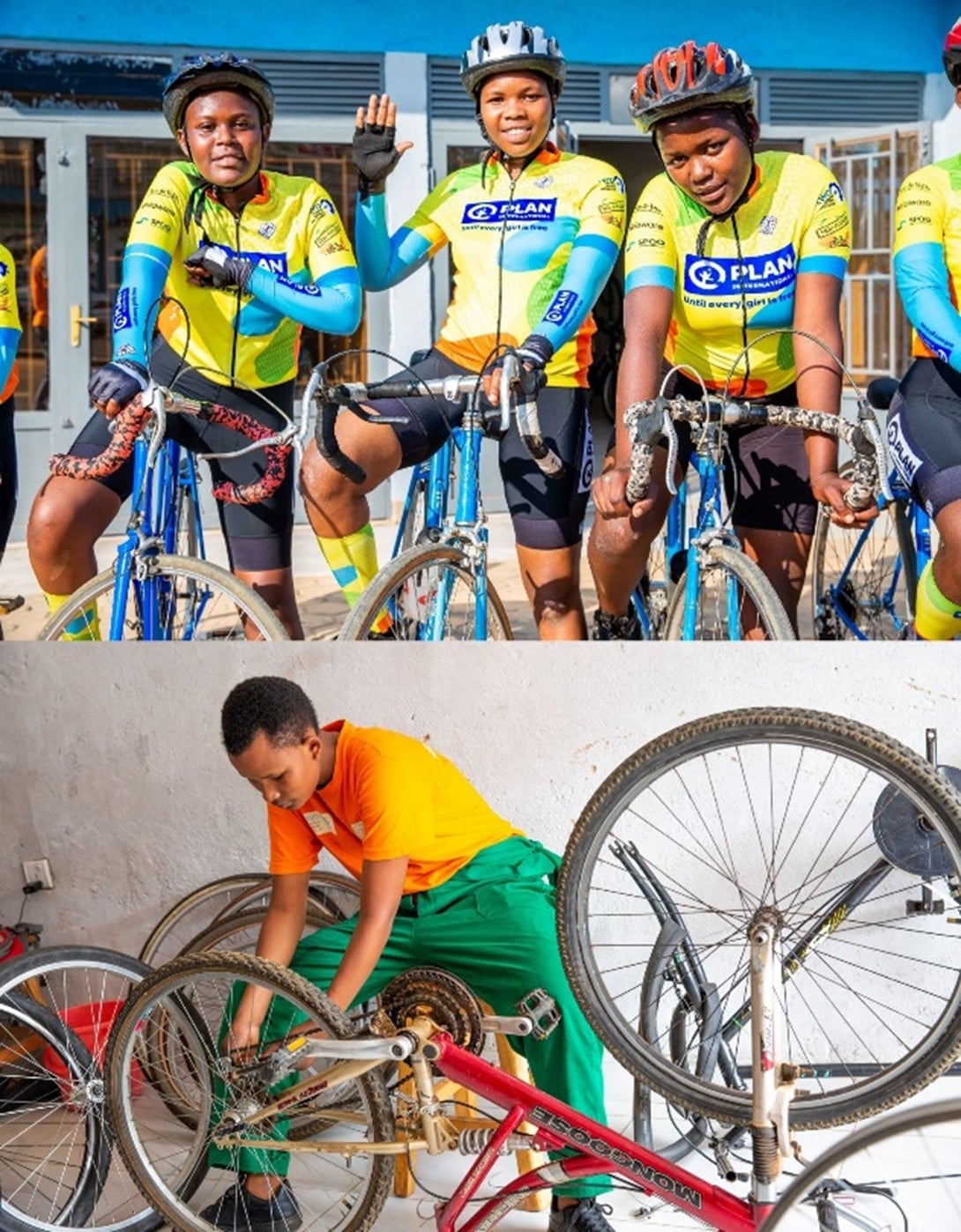
In Rwanda, Olivia trained as a bicycle mechanic while pursuing her dream of becoming a professional cyclist. She prepared for the Cycling World Championships that were held in Rwanda in the following year.
Six years ago, when Olivia was just 14, she lost both her parents and suddenly became responsible for caring for her four younger siblings. She married and became a young mother the following year, which forced her to drop out of school. Confused and anxious about the future, she later found a new sense of direction through programmes supported by Plan International.
As a core member of the cycling team, Olivia received professional cycling training and vocational skills in welding, bicycle mechanics, tailoring, and information and communications technology, sharpening her self-confidence and leadership abilities while equipping her for different settings and workplaces.
In addition, she also gained access to management training, scholarships, materials and practical guidance to help her start a small business, such as a bicycle sales or repair shop, and work towards financial independence. “The opportunity to acquire specialised skills is invaluable. It equips me with the tools to build a better future for myself and my family,” shared Olivia.
Protection
Committed to Strengthening Protection for Children
In Hong Kong, nearly 50 early childhood education centres took part in Plan International’s Child Safeguarding School Award Programme in the 2024/25 academic year, aiming to ensure children grow up in safe and healthy environments. Among them, the Five Districts Business Welfare Association Kindergarten was recognised as one of the “Child Safeguarding Achiever”.
At one participating kindergarten, children developed strong self‑protection skills through the programme, such as checking with their parents before accepting gifts and never taking items from strangers. One day, a staff member noticed an unfamiliar adult lingering outside the school gate and handing out balloons. “Children love the balloons, but they have learned that they should ask their parents first before accepting,” the school principal shared. This simple reaction moved both teachers and parents as it showed the children applying what they had learned in everyday life.
The programme also included parent‑child workshops and training for staff, helping to raise safeguarding awareness across the school community. As the school explained, “When adults know how to prevent child abuse, children learn to protect themselves, and everyone looks out for one another, the spirit of child safeguarding truly comes to life. This shared responsibility helps create a safe and supportive environment for children to grow.”
In such a caring atmosphere, children are free to learn and thrive while the foundations of self‑protection take root.
Sexual violence cases have been reported in India on a near daily basis due to traditional cultures that perceive male superiority. 16‑year‑old Sanjana (pseudonym) grew up in this environment but refused to be defined by it. Through participating in Plan International’s project, she gradually developed a strong awareness of gender equality and learned how to defend her rights.
Sanjana not only became a youth group leader, but also actively used the “Safety Assessment” application launched by Plan International to organise several digital safety walks. The group explored the safety black spots in the community and proposed to government officials to install additional street lights and closed-circuit television surveillance systems on the streets to ensure the safety of girls.
At the same time, Sanjana also completed a self-defense course provided by Plan International and passed the techniques to other girls. “I found my voice by engaging in discussions, activities, and meetings. I am dedicated to supporting the well-being of girls like me. I want to empower them as I have been empowered.” Sanjana shared.
Emergency Relief
Standing With Children in Times of Conflicts and Emergency Crisis
The relentless Gaza Crisis extends far beyond loss of life, displacing 1.9 million people amid safety threats. Essential resources such as food, water, electricity, and fuel are critically scarce, drastically limiting living conditions.
Eight‑year‑old Sara (pseudonym) attends one of Plan International’s temporary learning centres in Gaza. One day, her father was killed while waiting for supplies at the Zikim border crossing in northern Gaza. His death left the family without support, and leaving Sara’s mother solely responsible for the family, struggling to survive amid conflict and hunger.
At the learning centre, our teaching staff noticed a change in Sara’s behaviour and quickly recognised her need for psychosocial support, hence providing extra attention and encouragement to help her recover and smile again. For Sara, the centre has become more than a classroom — it is a place of safety and nurture. “We have moved from one house to another, but I feel at home here with those who have helped me,” said Sara, “I want to grow up to be a teacher and give children hope.”
During the conflict, Plan International has provided food assistance in Gaza, including hot meals and food parcels containing staples such as rice, pasta, flour, tuna and cheese, as well as clean drinking water. We have also offered psychosocial support for children and set up temporary learning spaces to help them cope and continue learning in the midst of a crisis.
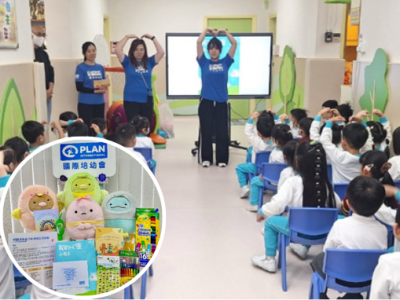
Following the Tai Po fire, affected students had to relocate at short notice. Their studies were disrupted and many felt unsettled. While their parents focused on rebuilding their lives, families faced growing financial pressure.
Through Plan International’s programme, affected students can receive HK$2,000 in immediate cash assistance, arranged through applications by schools and social workers. This helps them continue their education and eases the financial burden on their families. Children with special needs can access further support through the Special Cash Assistance Programme, covering costs such as cross-district school travel, specialist training, and essential learning materials, helping them gradually return to a normal learning routine.
To support their emotional well-being, Stress Relief Packs containing soothing toys and activity materials were distributed to affected children. Our team has also run a series of emotional support workshops in local kindergartens, using activities like clay modelling and storytelling. These sessions allowed children to express their feelings freely and helped them release anxiety. Throughout, we closely monitored their emotional state, identified those needing extra psychosocial support early, and provided appropriate follow-up care.
Join us through Plan with Children to safeguard children’s rights.
Support Our Local and International Projects For Just HK$2 a Day One-off Donation