

“Menstrual Hut” on an All‑Boys School Campus: Five Hong Kong Students Created Installation Art to Raise Awareness of Girls’ Rights Following a Study Trip to Nepal
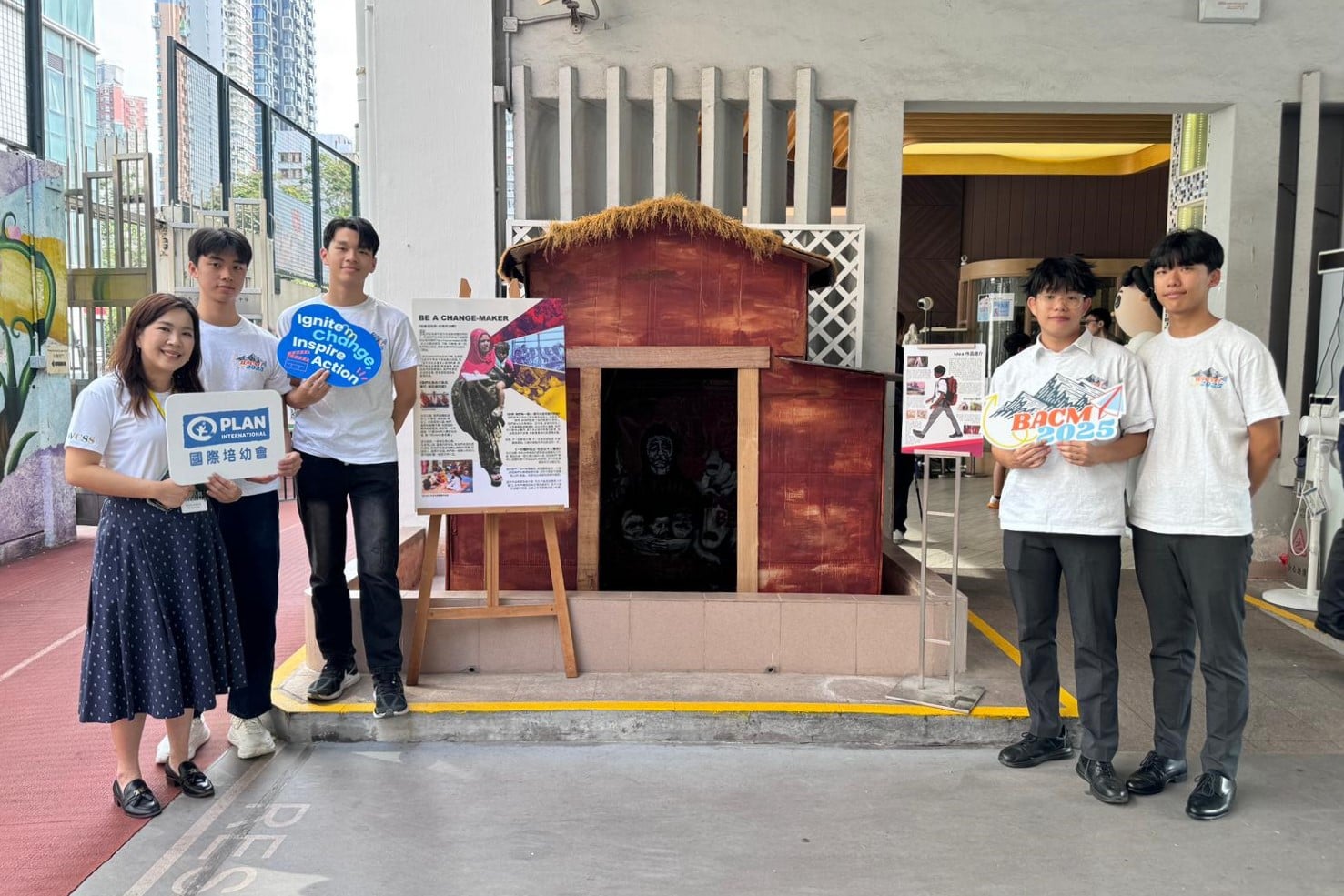
In Hong Kong, menstruation remains a private, often unspoken topic, particularly within the environment of an boys’ school. So why would a group of male students initiate conversations through an art installation?
Last year, Aiden, Brian, Fergus, Nathan and Ryan from Cheung Sha Wan Catholic Secondary School joined Plan International’s “Be a Change-maker” (BACM). Together with 15 other students, they travelled to eastern Nepal to visit local schools and communities.
Through detailed briefings from Plan International staff there, they gained insight into the realities of various community issues. They were particularly struck by the restrictions faced by Nepalese girls due to menstrual taboos, limited access to education, and entrenched cultural norms. “It turns out that things we take for granted, like gender equality and women’s rights, are unattainable in some countries,” Fergus reflected.
Their experience inspired them to create an installation artwork based on Nepal’s “menstrual huts” (Chhaupadi) upon their return to Hong Kong, with the aim of raising awareness of the challenges faced by girls on the other side of the world.
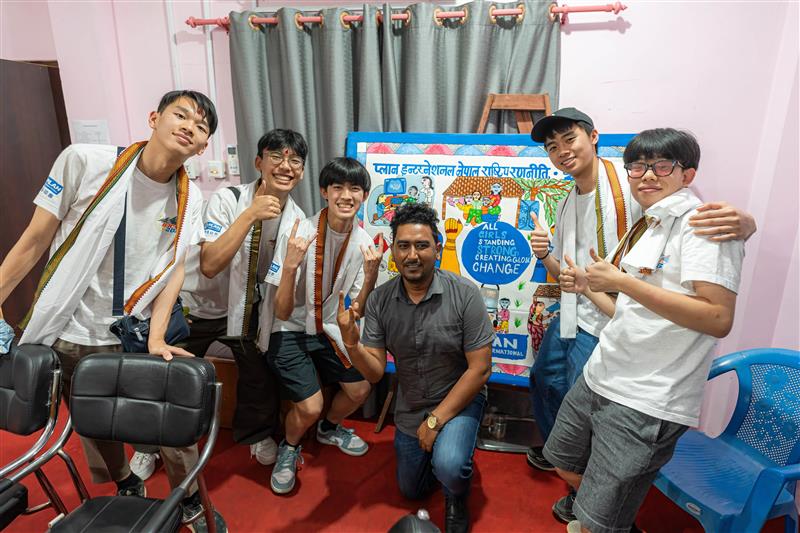 Aiden (first from left), Nathan (second from left), Fergus (third from left), Brian (second from right) and Ryan (first from right) from Cheung Sha Wan Catholic Secondary School joined Plan International’s “Be a Change-maker” and, together with other participants, formed a group of 20 students in total who travelled to Nepal.
A Cross‑Border Realisation That Sparked Awareness and Action
For boys’ school students, menstruation is often a taboo and an unfamiliar subject. “Menstruation is very unfamiliar to us. We usually only hear about it from our mother or sister, but we’ve never seriously considered the gender equality and women’s rights issues behind it,” Aiden admitted. The trip to Nepal had a profound impact, prompting the group to ask: “What can we do? Are there inequalities around us that we have never noticed?”
Motivated by these reflections, the five boys began researching the challenges faced by girls in Nepal. They discovered that in some areas, cultural beliefs label menstruation as “polluting”, forcing girls to leave their homes and stay alone in a bare and shabby “menstrual hut”. These unsafe structures often leave girls sleeping on the ground, exposed to the cold, isolation, and the risk of wild animal attacks or sexual assault. Although the practice has been outlawed, it persists due to deeply rooted traditions.
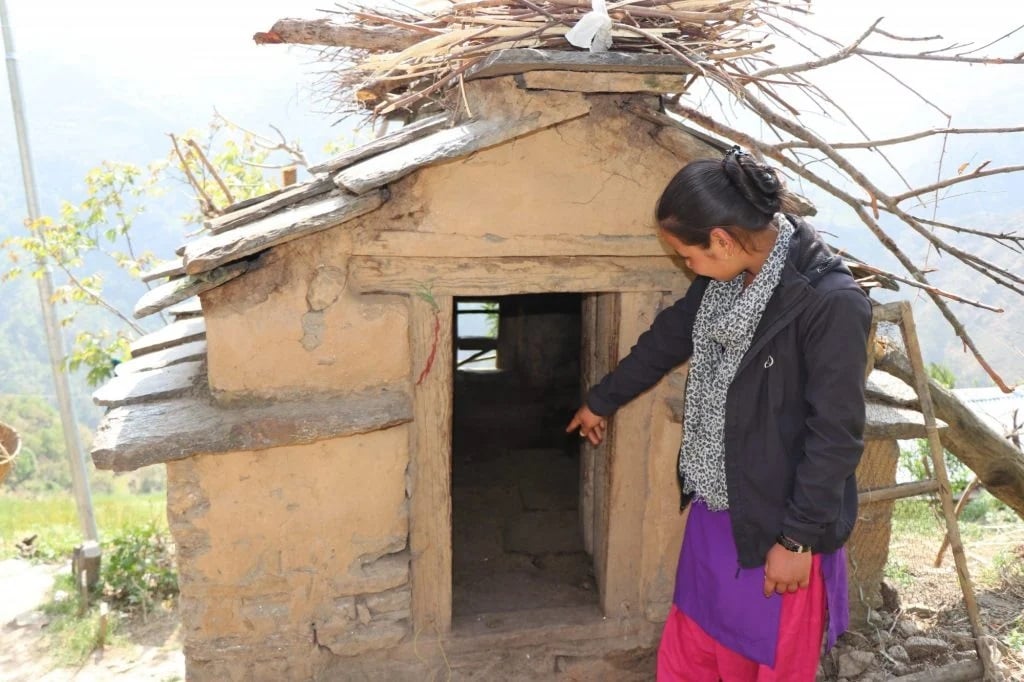 Menstrual huts often lack doors, windows, or equipment to keep warm, leaving girls vulnerable. Tragically, some girls have lost their lives due to hypothermia and animal attacks.
Using Installation Art to Recreate the Fear of Isolation
To help their schoolmates grasp the emotional weight of these cultural taboos, the boys decided to recreate a “menstrual hut” as an installation on campus. By doing so, they hoped to reduce the awkwardness boys felt about the topic and to promote open discussion on gender issues, encouraging reflection on the prejudices that exist in their own environment.
As a visual arts student, Brian took on the role of leading the team to build the installation during the summer holiday and the start of the new school term. The construction coincided with typhoon season, and constant wind and rain repeatedly disrupted their progress. The team had to contend with damp materials and adjust the structure multiple times. Despite these setbacks, they persevered, learning to adapt and ultimately feeling a great sense of achievement upon completing the piece.
Reflecting on the process, the boys noted that the unpredictable weather was their biggest challenge. “I expected it to be tough, but only realised how complicated it was once we started,” Brian said, “The wind and rain were constant, causing the wooden strips to soak up water, and strong gusts even pushed the tent aside. Many accidents happened, so we had to improvise.”
Beyond replicating the hut’s appearance, the students wanted visitors to feel the emotions behind it. “If it’s just an empty shell, people may not understand our message,” Brian explained, “We hope that as soon as they step inside, they can feel the weight of the girl’s emotions.” He painted scenes inside the hut inspired by murals they saw in Nepal, adopting the perspective of a girl confined during menstruation to express her fear and loneliness.
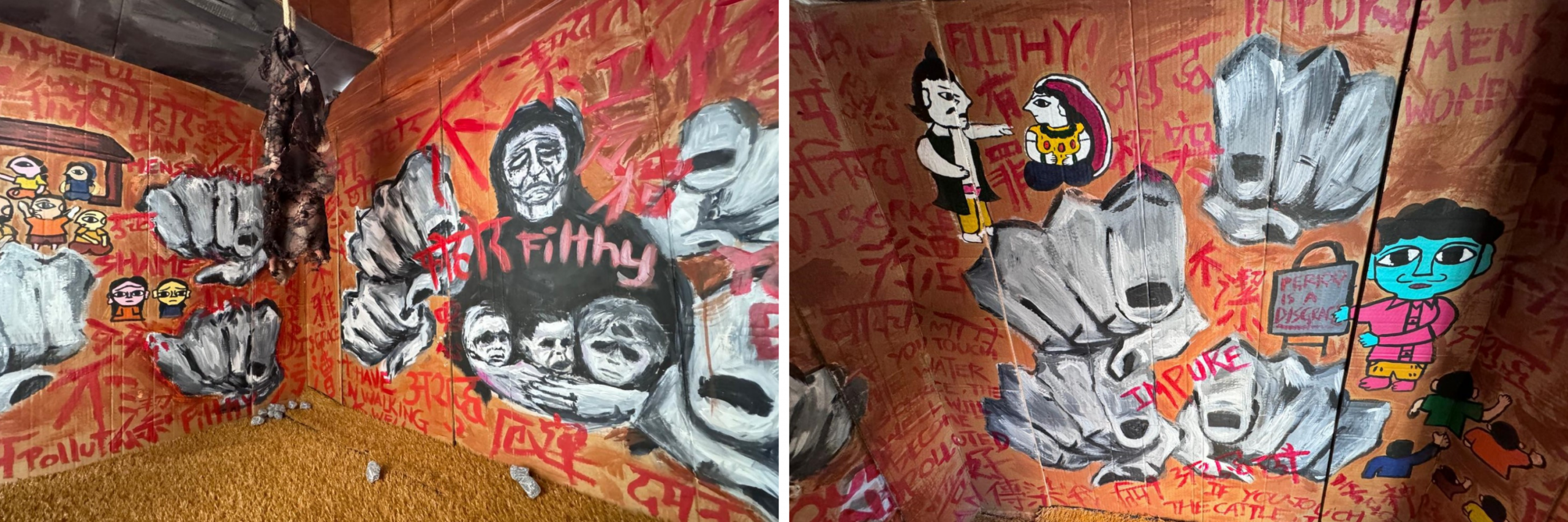 The boys saw numerous murals across Nepal. Even without understanding the words, they felt their emotional impact, convincing them that art can transcend language—a belief they carried into their installation.
Transforming Observations to Real Actions and Igniting a Commitment to Change
When displayed at the school’s open day, the installation drew strong interest. Many visitors were deeply moved after hearing the students’ explanations. One student remarked, “The space is so small it’s hard to stand up straight, yet girls have to stay inside for several days… It’s unimaginable.”
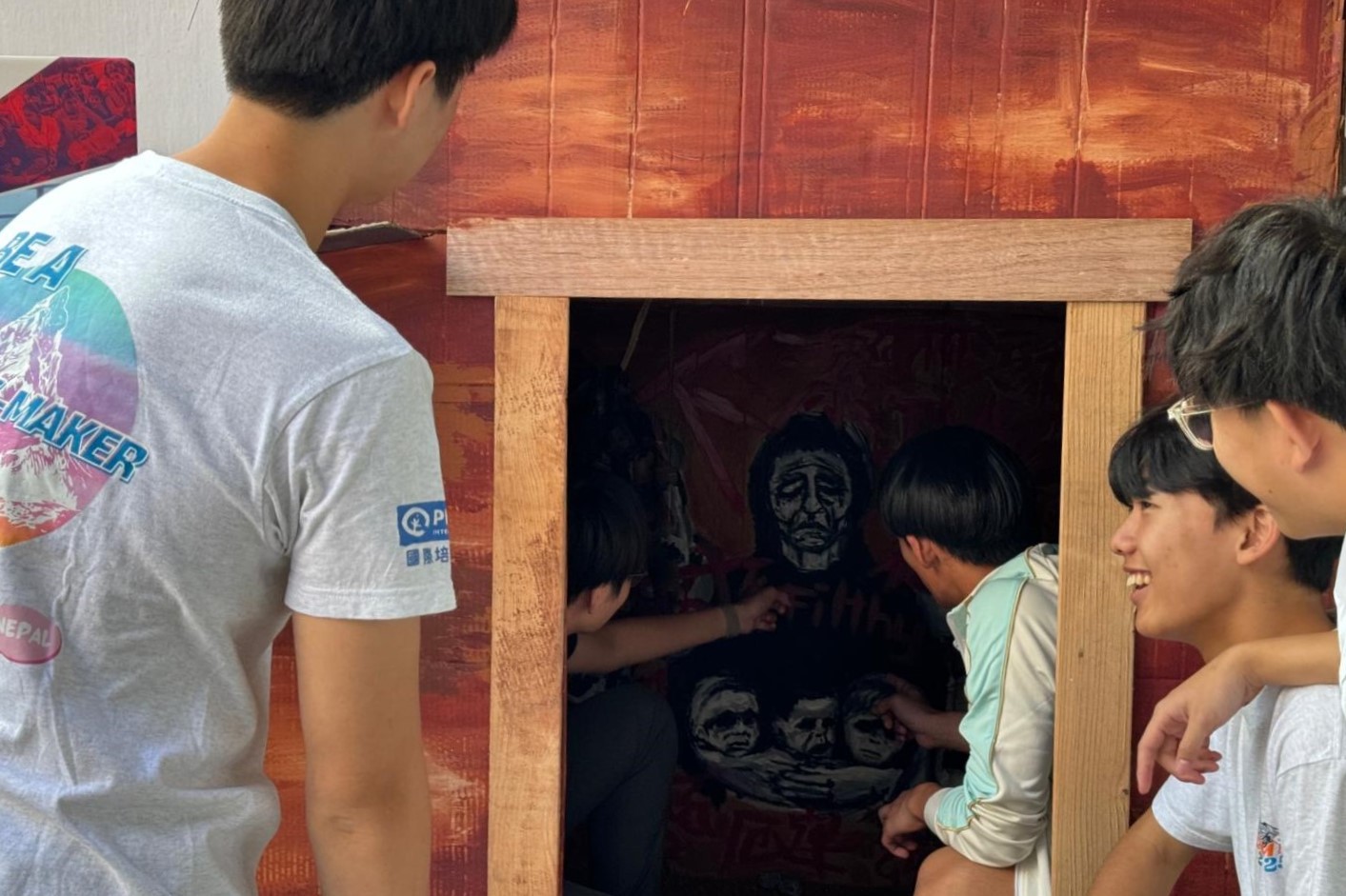 The five students took turns explaining the installation to visitors. “We hope people not only learn about menstrual huts in Nepal but also ask: What caused girls to endure this? And what can we do?” Nathan (second from right) said.
For the five boys, BACM became more than just an overseas trip; it was a transformative experience that broadened their perspectives and shifted their mindsets. Their teachers also observed clear growth in the group, noting, “The programme exposed them to issues rarely encountered in Hong Kong, particularly by witnessing the realities of girls’ rights in developing countries. Their reflections and actions after returning showed marked improvement.” The school actively supported opportunities for students to put their learning into action, fully aligning with the spirit of the BACM.
Nurturing Youth to Drive Positive Change
Last year, 20 BACM participants travelled to Nepal, witnessing the work supported by Plan International in the region. They saw first-hand how improved sanitation facilities were enhancing the lives of girls in school. This experience inspired Aiden, Nathan, Fergus, Brian, and Ryan to move from simply “seeing the problems” to “taking action”.
Over the years, Plan International Hong Kong has supported nearly 120 young people through the BACM. Beyond taking students abroad, the programme guided them to understand inequality issues in different societies. From identifying issues and conducting research to taking the initiative upon returning to Hong Kong, participants are taking their first steps towards becoming global citizens.
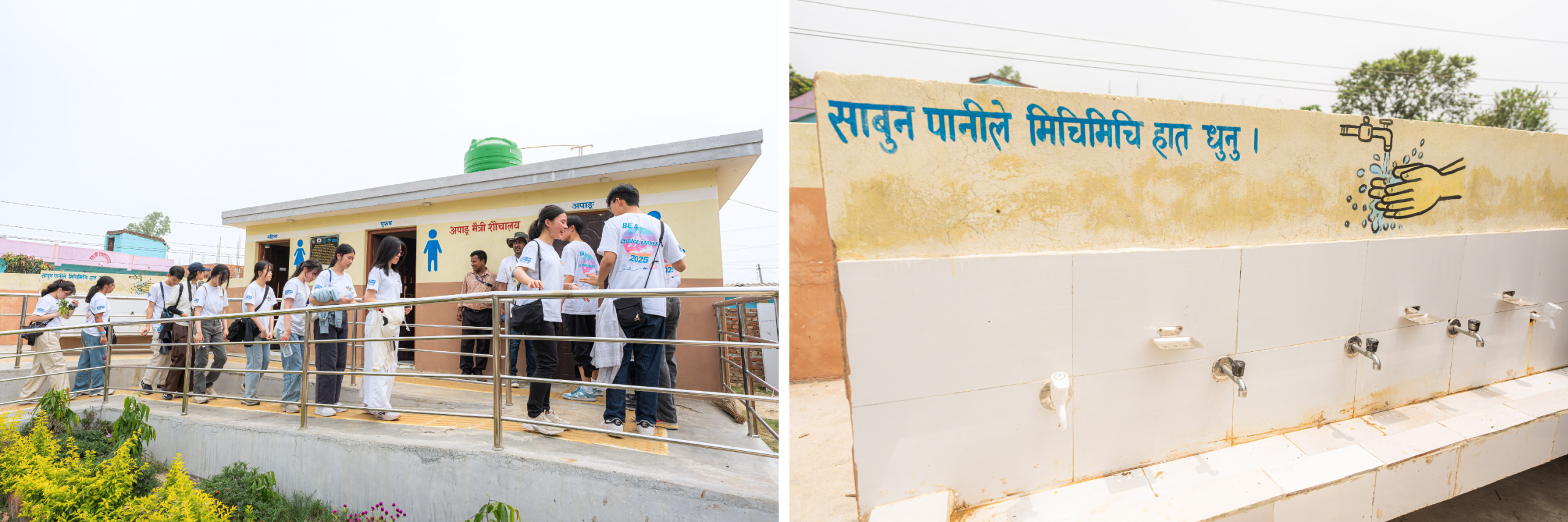
During their visit to a school supported by Plan International in Nepal, students witnessed the improvement of sanitation facilities. “We saw the staff’s determination to help local girls,” Ryan shared, “They understand their needs and are doing their best to improve things step by step.”
< One-Year Report on the Myanmar Earthquake
