
Breaking Taboos and Discrimination: Nepali Girls Leave Menstrual Huts to Embrace Equality
Menstruation is a normal biological process for women. Yet in some developing countries, it is still regarded as impure, even believed to bring misfortune. In remote areas of Nepal, girls are forced to isolate themselves during their periods, left alone to huddle in crude “menstrual huts.” This deeply entrenched practice not only subjects them to discrimination and fear, but has also claimed the precious lives of girls, leading to irreparable tragedies. Why must menstruation be stigmatised, becoming shackles that restrict girls’ lives?
Girls Trapped in Menstrual Huts, Spending Long Nights in Fear
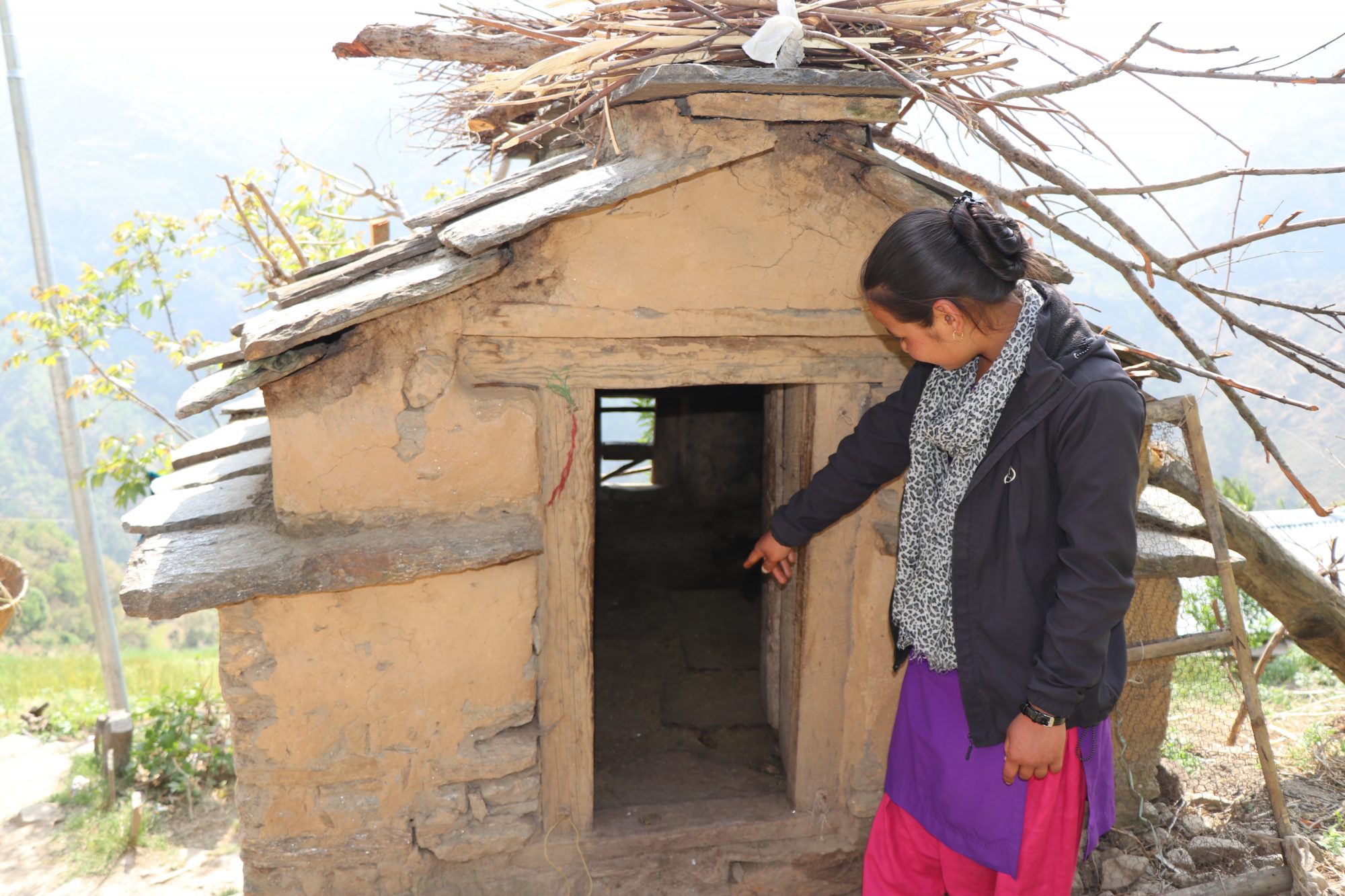
The abandoned and gloomy hut was a nightmare for Manika, a 14-year-old girl from Nepal. Menstruation is a natural process for females every month; however, to girls living in rural Nepal, menstruation symbolises fear as they have to be isolated in horrifying menstrual huts called “Chhaupadi” every time they are on their period.
“Every night I was scared that I could make it to the morning. If I was not careful, I could be bitten by a poisonous snake or insect or be raped by a drunk man outside.” Manika could hardly fall asleep on the floor of the bare and shabby hut with no windows or doors.
DAILY HK$4 BRING GIRLS HOPE AND FREEDOM
The menstrual huts are usually far away from the girls’ homes, and there are no windows, doors, or equipment to keep warm. It is not easy for girls to seek help when they are in danger and some girls lost their lives because of hypothermia and animal attacks.
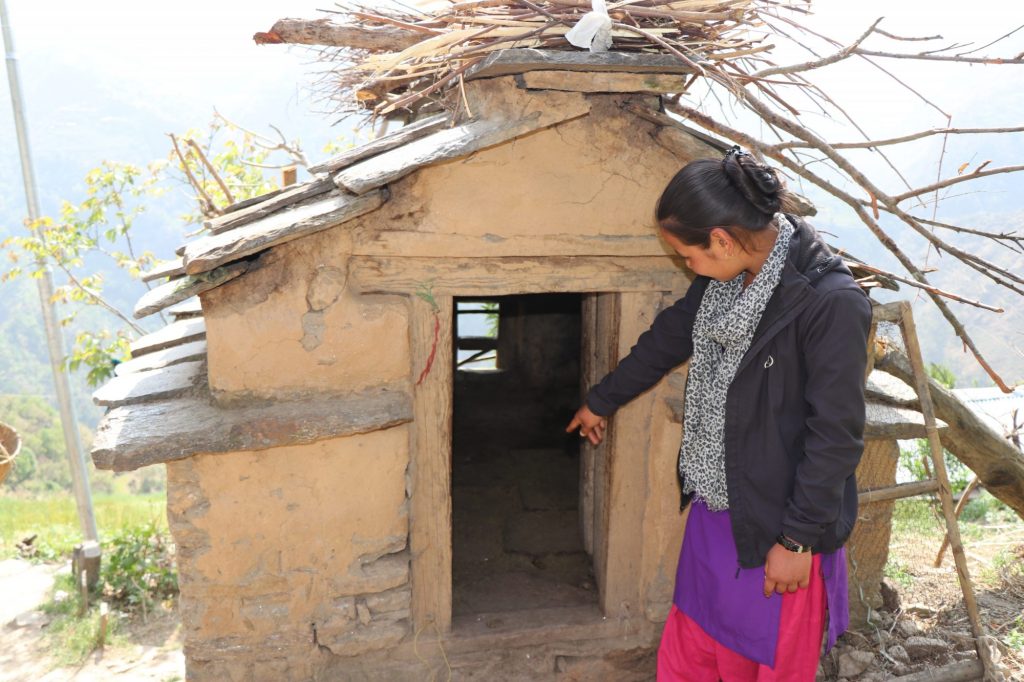 Girls cannot even stand up in the tiny huts. It is difficult to imagine how hard it is for girls to stay inside for several days each month.
The Stigma of Menstruation Contributes to Females’ Low Social Status
In Nepal, due to traditional beliefs, menstruation is considered “unclean” and offensive to their gods which will bring people bad luck. Therefore, people in Nepal are scared and disgusted by the concept of menstruation and they discriminate against females who are on their period by sending them to the menstrual huts. The girls were not allowed to get in touch with the male members of their family, touch their precious water sources or consume milk-related food as it would be a curse and kill their livestock.
The stigma of menstruation has further dragged down the social status of females in the patriarchal culture. As menstruation is a forbidden topic, girls cannot seek help or raise any questions even if they encounter menstrual issues and schools refuse to provide reproductive health education to girls. Girls, therefore, lack knowledge of menstrual health and general health care.
Nepali believes if a girl on her period touches the water source, her family will be cursed by the Gods. Therefore, girls have to stay away from freshwater sources.
Although the Nepali government banned the practice of “menstrual huts” as early as 2005 and criminalised it in 2017, enforcement remains difficult in remote communities where traditional beliefs are deeply entrenched. As a result, tragedies linked to menstrual huts continued to occur. In 2019, a 21‑year‑old girl died after spending three nights in an open-air menstrual hut, sparking nationwide attention and leading to the demolition of thousands of such huts. However, the outbreak of COVID‑19 stalled community work on menstrual education, allowing the practice to resurface. In 2023, another heart-breaking case emerged when a 16‑year‑old girl, forced to stay in a menstrual hut, was fatally bitten by a snake while she slept.
Struggling Against Period Poverty: Girls Forced to Drop Out Without Sanitary Pads
Girls are already suffering from menstruation taboos and shaming but they still have to face the problem of “menstrual poverty”. In Nepal, sanitary pads are expensive; a pack of thirty higher-quality pads, enough for one girl’s monthly cycle, costs about HK$33 – which is more than 60% of a poor family’s daily income (around HK$53). For many households who struggle to make ends meet, such a cost has become an almost unbearable luxury.
The Nepalese government has introduced policies to provide free sanitary products to female students in public schools, yet implementation in remote areas remains difficult. Period poverty continues to be a major obstacle to girls’ education. Fifteen‑year‑old Jyoti, a ninth‑grade student from a poor family. With menstruation treated as a taboo, her family knows little about menstrual hygiene, leaving her to endure the discomfort and anxiety on her own. Each time her period arrives, the lack of proper sanitary pads forces her to miss school, slipping her learning opportunities away again and again. For Jyoti, menstruation is not merely a biological process—it has become a cruel barrier that strips away her right to education and blocks her path toward a brighter future.
DAILY HK$4 BRING GIRLS HOPE AND FREEDOM
Education Has to Go with Materialistic Support
To put an end to “period shaming” and “period poverty”, Plan International set up menstrual-friendly rooms at local schools for girls to take a break, learn about menstruation and get free sanitary products. Workshops are also arranged to teach girls to make reusable sanitary pads and raise their awareness about menstruation and girls’ rights.
Plan International believes that providing materialistic assistance cannot fully solve the problems. We must educate girls, boys, parents, and everyone in the community to remove the stigma of menstruation so that girls can be treated fairly and friendly and discrimination can be eliminated.
 Benefiting from Plan International’s menstrual project, Jyoti received the sanitary supplies she needed at school, learned alongside her classmates about the importance of menstrual hygiene, and even made reusable sanitary pads with her own hands.
Break the Shackles: A Girl who Changed the Community Culture
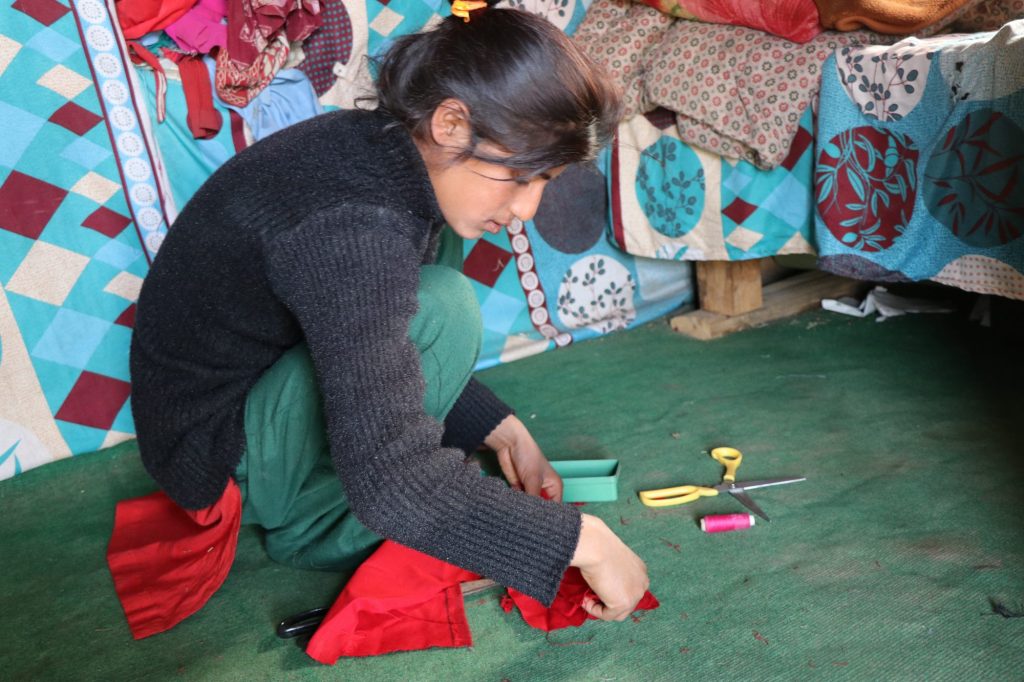
Education can make an impact! Pratika, another 14-year-old girl from remote Nepal acquired the skills to make reusable pads from Plan International’s workshop last year and she learned that the treatment of girls during their period is unfair. She was determined to change the culture in her community starting with the people around her.
Pratika broke the silence and raised the “forbidden” topic of menstruation to her friends and families. She taught her friends to make reusable pads and suggest her father abolish the use of menstrual huts. Her father’s reaction surprised her! Once Pratika’s father realised his labels on menstruation had made her daughter suffer from fear and discomfort, he immediately stopped using the menstrual huts and he was even asked to join the school committee to share his learnings with the school and other parents.
 |
 |
|
Manika still remembers her fear of being trapped in her menstrual hut. She thanks Plan International for the community education that brought her out of her hut. The menstrual hut is now used to raise goats. |
Pratika, 14‑year‑old girl from Nepal’s mountain region, learned how to make reusable sanitary pads through a Plan International workshop. Determined to spark change, she began with her own family and friends, hoping to transform the menstrual culture in her community. |
We cannot completely overturn the culture in a moment or two, but we can bring changes via education in the long run. Pratika’s determination has created a new menstrual culture in her community! Plan International hopes the public can join us in providing menstrual support and education in Nepal to help more girls get rid of the stigma of menstruation so that they can walk out of the menstrual huts and step towards a brighter future.
- Donate HK$100: Send a dignity kit* to a Nepali girl to maintain personal hygiene during menstruation
- Donate HK$250: Support 20 Nepali girls in schools to get access to menstrual hygiene management facilities and sanitary pads, and also use improved toilets with soap and water, so that they can handle menstrual waste properly.
- Donate HK$500: Support a pilot programme on dignified menstruation via talks and dialogues between students and the government
- Donate HK$1,300: Help five families get access to clean water and build a water filtration unit at a school to ensure girls’ health at all times
- Donate HK$3,000: Send dignity kits* to 10 Nepali girls to maintain personal hygiene during menstruation and build 3 water filtration units at a school to ensure girls’ health at all times
*Dignity kit: including soap, toothbrush and paste, towel, nail cutter, comb, reusable menstrual pads etc.
Let’s create a carefree period together!
DAILY HK$4 BRING GIRLS HOPE AND FREEDOM
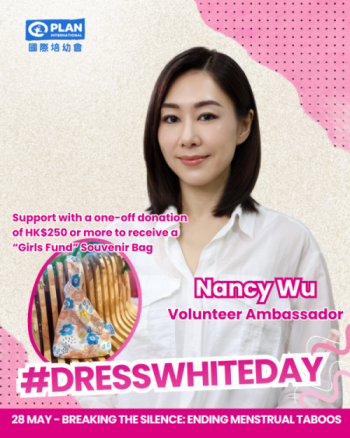
On May 28, World Menstrual Hygiene Day, we invite everyone to join Plan International’s volunteer ambassador Nancy Wu in wearing white trousers or skirts to participate in #DressWhiteDay. Share your message on social media with the hashtag #EndMenstrualTaboos to encourage society to break free from negative labels surrounding menstruation.
At the same time, you can support our menstrual health projects in Nepal through donations. By promoting community education, we aim to help more girls overcome menstrual stigma and reclaim ownership of their bodies and rights.
From now until 31 July 2026, the first 200 new donors with a one-off donation of HK$250 or above will receive a “Girls Fund” Souvenir Bag.
*Online exclusive; limited quantity, available while supplies last.
*Free shipping within Hong Kong only. For Mainland China, Macau, and Taiwan, delivery will be cash on delivery.
