

Pooi To Middle School Girls Take Action for Gender Equality, Speaking Up for Child Marriage and Women in the Workplace
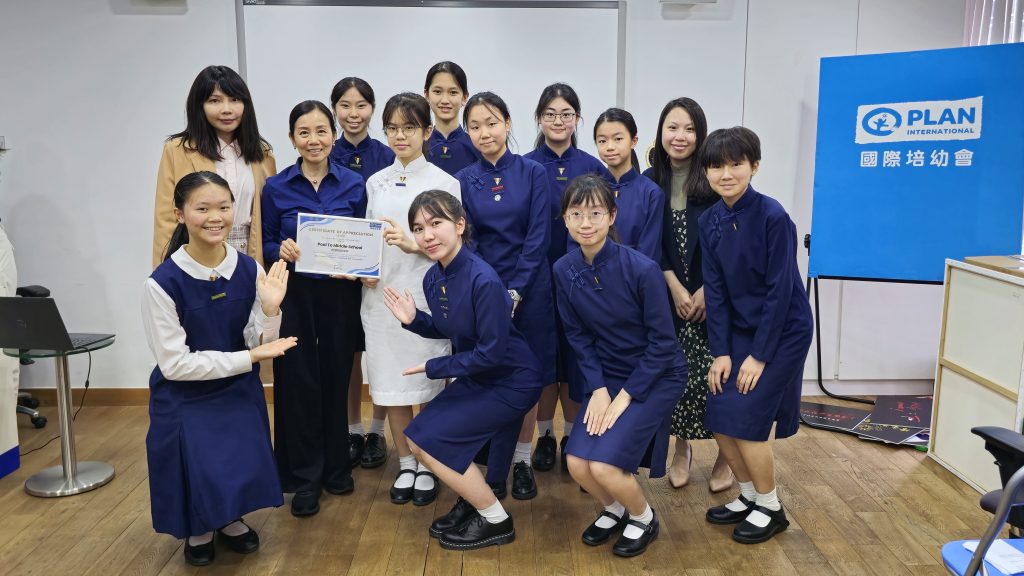
“We know that women in different countries face gender inequality, but they haven’t had many opportunities to speak out. This learning programme provide a platform for us to voice out the issue, raise awareness, and even encourage others to make changes,” said Tam, explaining why she and her schoolmates joined the 13th ESD Learning Programme.
Last academic year, Plan International Hong Kong partnered with the UNESCO Hong Kong Association for the first time as the theme partner of the programme, introducing the new theme — “Gender Equality and Girls’ Rights”. 14 girls from Pooi To Middle School took part, dividing into two groups to explore child marriage and the topics of female leadership and gender stereotypes. 10 of them later visited Plan International’s Hong Kong office to share their findings and reflections.
Girls from Different Worlds: Looking at Child Marriage Through Art
The group researching child marriage admitted that the issue initially felt quite distant compared to more familiar topics in Hong Kong such as appearance and body image. So why did they choose it?
“When we realise some problem exists, if we have the ability and opportunity to raise awareness and encourage more people to know, but we don’t take action, I feel it’s very cruel,” said Zhang. Motivated by this strong sense of injustice, the girls studied real cases of girls forced into early marriage. They named their project “Did She Marry for Love? A Lament for Child Marriage Through Artwork” to highlight the severity of the issue.
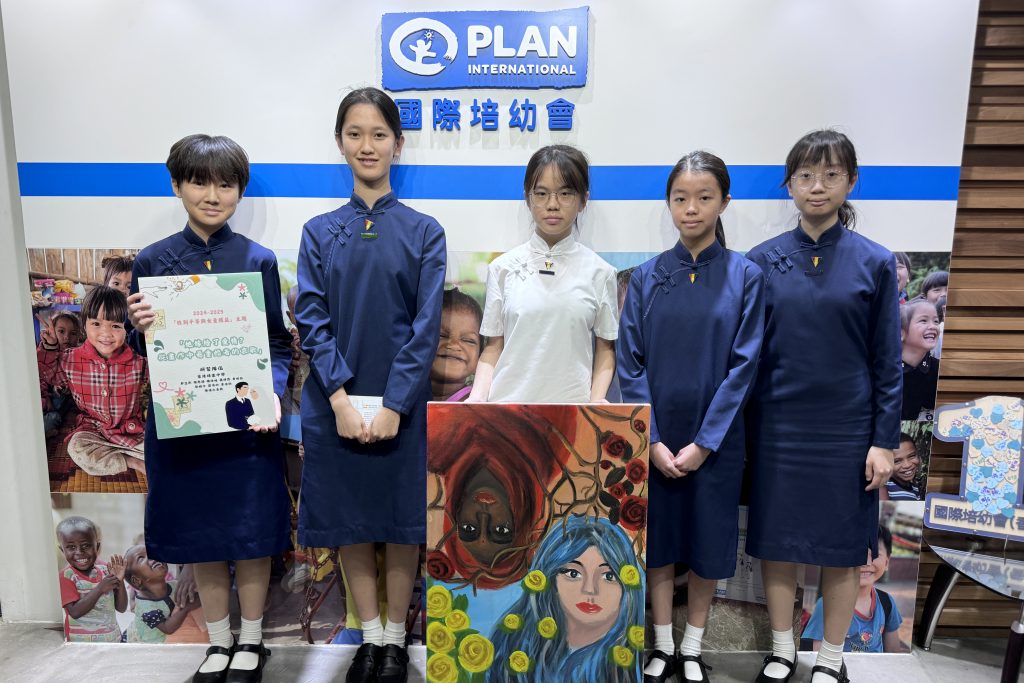 (From left) Zhang, Wei, Lau, Law and Wat carried out in-depth research into the challenges faced by girls affected by child marriage in developing countries.
To engage their schoolmates, the students displayed their own paintings on campus. Using a powerful double-layered composition, the artwork contrasts two different worlds: above, a girl trapped among thorns, symbolising the hardship of child marriage; below, a girl surrounded by flowers, reflecting lives that are full of freedom and light.
Lau, who led the artwork, explained that the idea came from real case studies shared by Plan International. “During the painting process, I thought about how, in another corner of the world, there is a group of girls experiencing completely different things from us. This became the initial motivation for my painting, and I used two parallel timelines to present the scene,” said Lau.
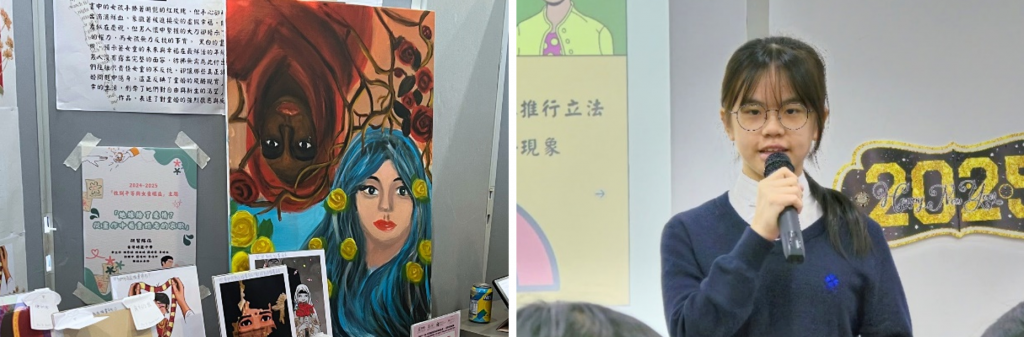 Lau’s artwork uses a double-layered composition to highlight the stark contrast between a life experiencing child marriage and a life of freedom.
Challenging Gender Stereotypes in the Local Workplace
The second group chose a topic closer to home — the experiences of working women in Hong Kong. Their project, titled “Promoting Female Leadership Stories: Breaking Gender Stereotypes, Becoming Tomorrow’s Stars”, aimed to challenge harmful labels.
Lee observed that social media is full of labels placed on women, such as “A4 waist” and “being a good wife and mother”. “Why aren’t men ever bound by these labels? We really want to remove these labels for our classmates and for everyone. We want to tell everyone: beauty shouldn’t be defined,” Lee doubted.
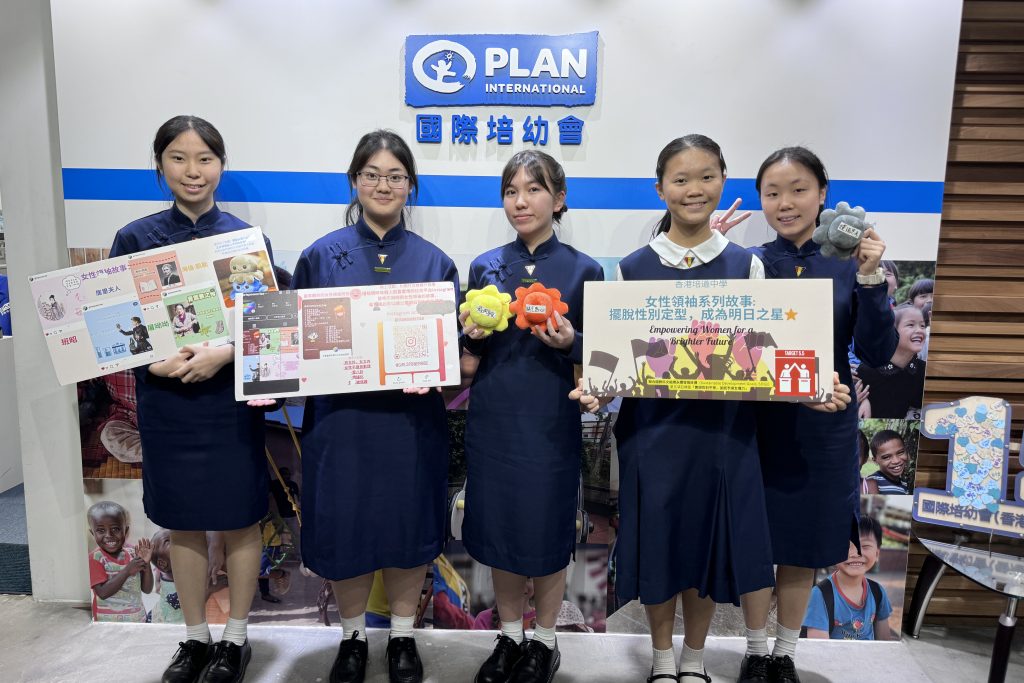 (From left) Lo, Lee, Tsoi, Tam and Ng examined the challenges faced by women in the workplace, aiming to raise awareness among their peers and challenge harmful gender stereotypes.
Before joining the programme, Tsoi often wondered, “What can a high school student change?” After five months of learning and action, her perspective shifted — “Everyone can contribute to promoting gender equality.”
Hence, the group created an Instagram page and held exhibitions at school to share stories of female leaders, successfully capturing the attention of their peers. Tsoi added that dismantling harmful stereotypes should not fall on women alone. “I think this should be a mission for the whole society, supported by widespread education and raising awareness. With social progress, we definitely have hope of achieving a truly equal society,” she shared.
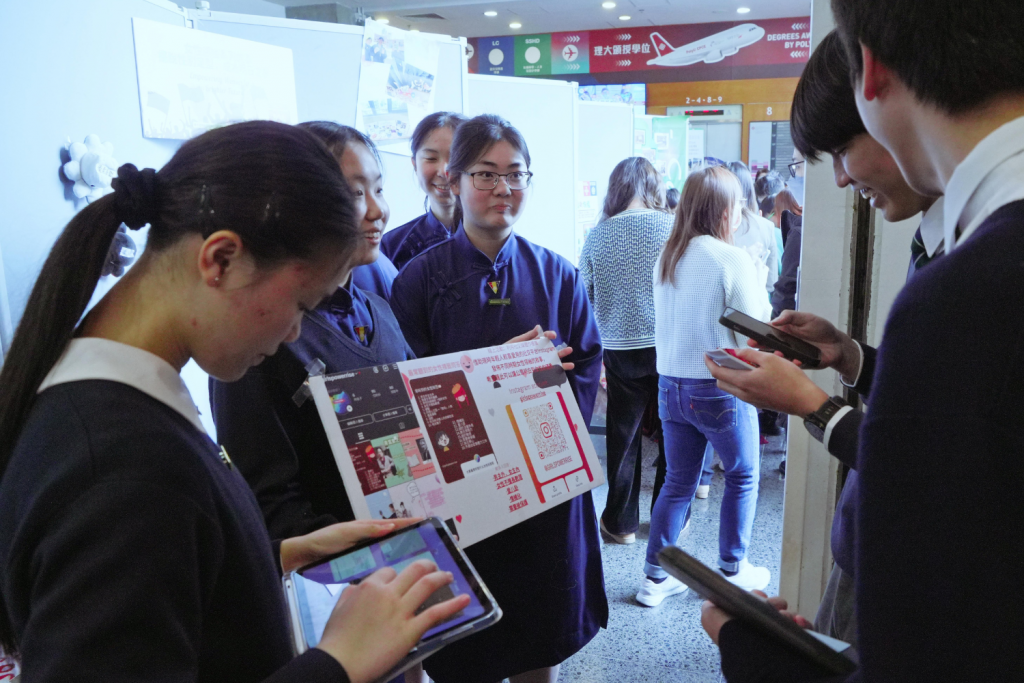 Through their actions, the five girls came to realise that everyone has a role to play in advancing gender equality, and they called on society to act together.
Plan International believes education is key to lasting change. Through nearly six months in the ESD Learning Programme, the girls from Pooi To Middle School showed the determination and ability of young people to drive social progress. Their efforts earned them several awards, including Second Prize in the Secondary School Category, Outstanding Written Report Award, and Outstanding Presentation Award.
Through this programme, Plan International hopes to inspire more young people to engage with important social issues and respond to the world’s challenges with action.
