

Zero Tolerance for Child Abuse: Raising Public Awareness and the Importance of Early Detection to Safeguard Children’s Growth
In recent years, child abuse cases in Hong Kong have steadily increased, with frequent incidents causing lasting harm to children’s physical and mental well-being, which is deeply concerning.
Definition of Child Abuse
Child abuse refers to acts or neglect directed at children under 18 that damage their physical or mental development. The main types include physical abuse, sexual abuse, psychological abuse, and neglect. Abuse often occurs where there is a clear power imbalance between the abuser and the child. The abuser exploits their age, status, or authority to place the child in a vulnerable position, making detection and intervention difficult. This dynamic is a key reason why child abuse remains a persistent and challenging issue to resolve.
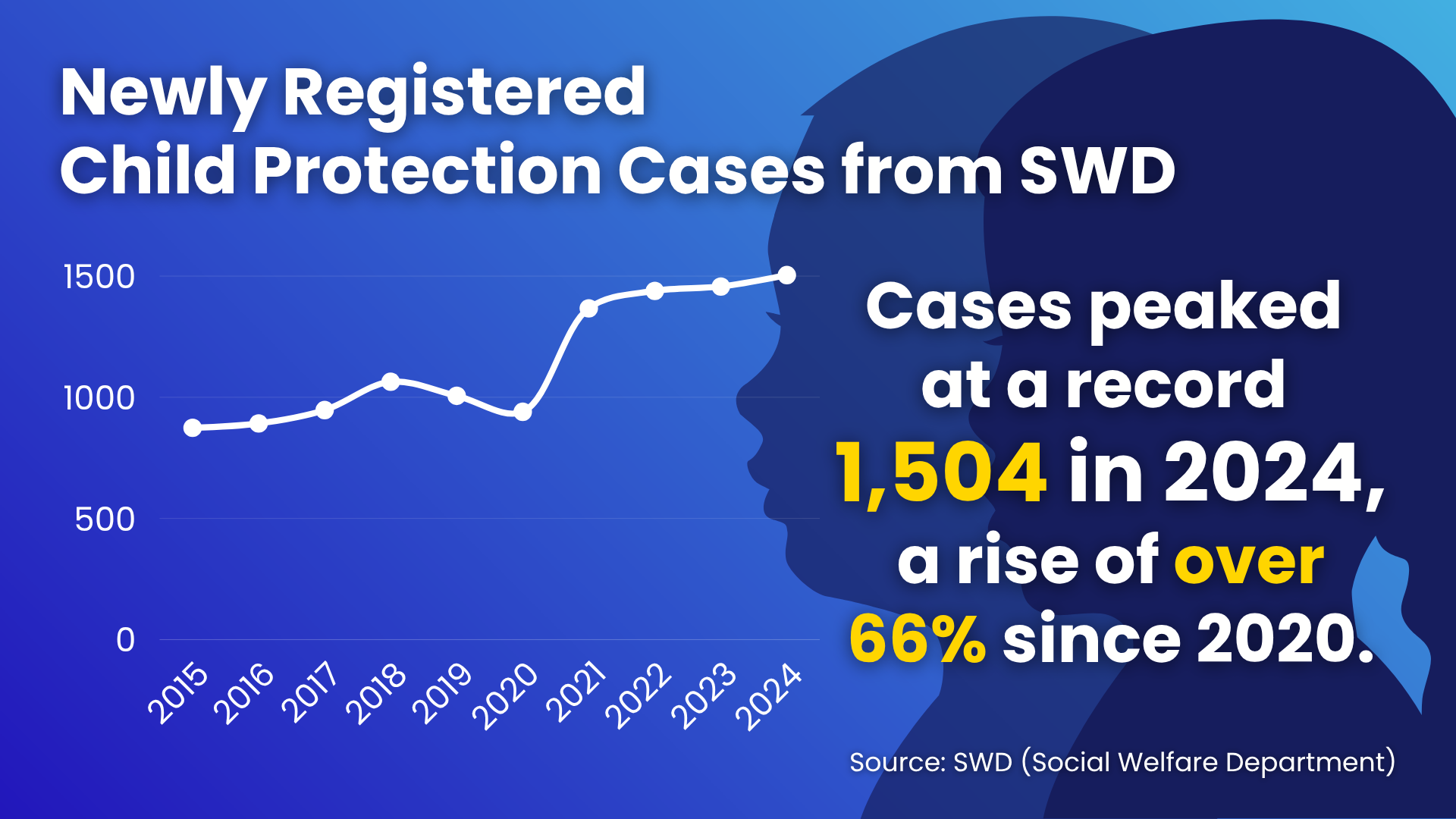
Child Abuse Cases Seriously Risen 66% Since 2020
According to the Social Welfare Department, 1,504 new child abuse cases were registered in 2024, a record high and a substantial 66% increase compared to the 904 cases reported in 2020. While some of this rise may reflect improved awareness and reporting mechanisms, the consistently growing numbers indicate a serious problem that cannot be overlooked.
Child abuse is a growing concern in Hong Kong and deeply damaging to children’s physical and mental health. Cases occur within families, educational settings such as schools, tuition centres, and extracurricular classes. These incidents reveal significant gaps in child protection systems and highlight the urgent need to strengthen prevention measures.
| Families | HK man sentenced to life for murder of 3-year-old daughter “A Hong Kong man has been sentenced to life for murdering his three-year-old daughter in 2020 by violently shaking her to death.” |
| Schools | Teacher arrested for planting spy cam in girls’ school washroom “Hong Kong police have arrested a male teacher working at one of the city’s prestigious schools for allegedly installing a hidden camera inside a girls’ washroom to take sexually explicit videos.” |
| Tuition centres/ extracurricular classes |
Repeat child abuser who exploited loophole to molest girl during 2022 volunteering stint at Hong Kong community centre handed 2-year sentence “A sex offender has been sentenced to two years in jail for exploiting a loophole in a background check scheme to molest a six-year-old girl while volunteering at a Hong Kong community centre last year.” |
| Childrens’ institutions/ homes: |
10 HK ex-care workers jailed up to 5 years, 4 months over child abuse “The 12 ex-childcare workers were among 34 charged with child abuse linked to a scandal at the Children’s Residential Home in Mong Kok, where caretakers were said to have shoved and hit |
Mandatory Reporting Bill Takes Effect Soon to Strengthen Child Protection
To enhance child protection, the Hong Kong government has passed the “Mandatory Reporting of Child Abuse Bill”, expected to come into force on 20 January 2026. The bill lists out 25 categories of specified professional, including teachers, social workers, medical staff, and workers in children’s homes, who would be mandated to report serious child abuse cases as soon as practicable if they have reasonable grounds to suspect a child is suffering serious harm or is at real risk of suffering serious harm. This encourages frontline staff in child-related institutions to be be more vigilant in identifying high-risk cases to safeguard children from further harm.
Multi-Party Collaboration to Build a Child Safety Network
However, stronger laws are only the first step. Effective and comprehensive prevention depends on the joint efforts of government, schools, families, and society. Following the government’s recent launch of the Guide for Mandated Reporters, child-related organisations should consider establishing robust internal reporting systems, ensuring timely and effective reporting of suspected abuse.
To prevent the recurrence of child abuse incidents, parents and caregivers need to enhance their awareness of child abuse and adopt positive methods to educate children, avoiding any physical or psychological harm, as well as neglect in caring for children. Parents should also strengthen communication with their children, pay attention to their emotional needs, and establish a safe family environment. Furthermore, they should take steps to manage their own stress levels to avoid impulsive, abusive behaviours.

Educational institutions should prioritise prevention by adopting a thorough “Child Safeguarding Policy” and maintaining open communication with parents, sharing information transparently, and building a network of trust and protection. To encourage more schools to adopt “Child Safeguarding Policy”, Plan International, supported by the Wu Jieh Yee Charitable Foundation, launched the “Child Safeguarding School” Award Programme. This initiative offers free consultancy to participating institutions to help establish and implement comprehensive safeguarding policies.
Plan International is committed to raise awareness of child safeguarding through education and advocacy. Through workshops, we aim to raise awareness among school staff and parents about child protection, while teaching children to establish a strong sense of ‘self-protection’ from an early age, enabling them to identify, prevent, and respond to incidents.

Child abuse cannot be tackled by any individual alone. All sectors of society must actively engage to prevent further tragedies, building a society of zero tolerance and protecting the bright future of the next generation.
